

Trending Now
 Ranjit Buildcon Wins ₹383.98 Crore Civil Contract for Lucknow Metro Phase 1B
 Tamil Nadu seeks Central Support for new Metro Rail Projects in Coimbatore, Hosur and Madurai
 Future Metro Control Centres: ST Engineering Transforms Command Rooms to Intelligent Nerve Centres
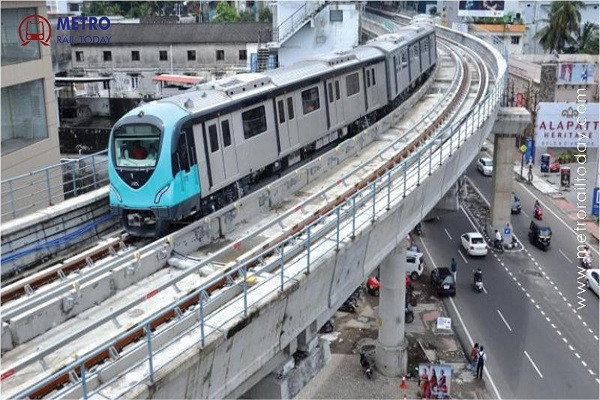 Kochi Metro unveils Visionary Design for Phase II Pink Line Metro Stations
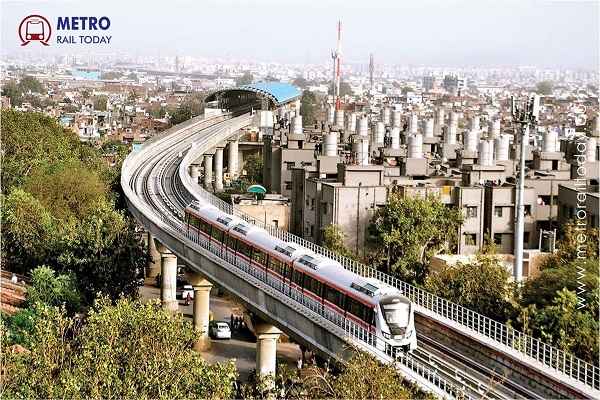 Design Consultancy Tenders floated for Ahmedabad Metro Phase 3 Elevated Corridors
 Global Metro Rail Infrastructure Market projected to reach US$ 78.3 billion by 2033
 Kinet’s Vande Bharat Sleeper Concept wins prestigious Italian A’ Design Award
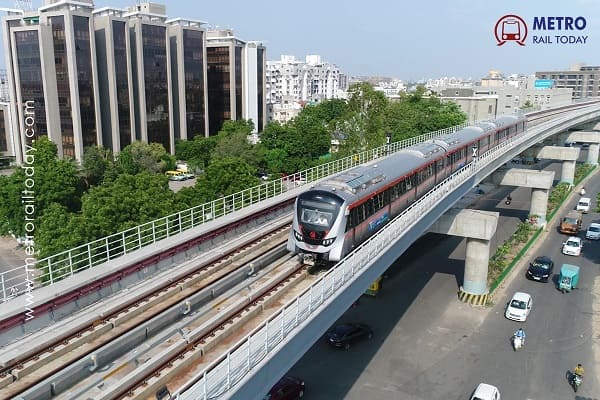 SYSTRA awarded Design Consultancy Contract for Ahmedabad Metro Phase 2 Extensions
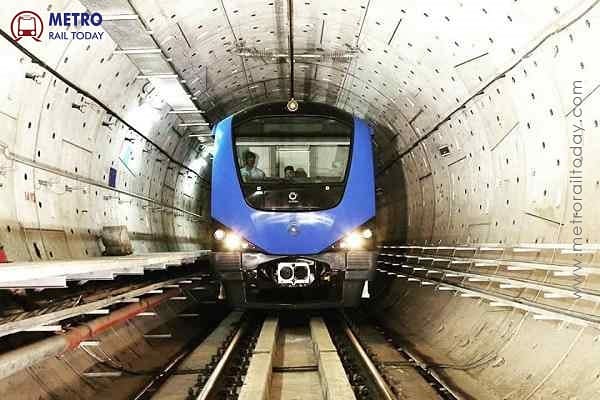 TBM Servarayan achieves Tunnel Breakthrough on Corridor 3 of Chennai Metro Phase 2
 India targets 350 kmph Indigenous Bullet Train to accelerate High-Speed Rail ambitions
Vijayawada Metro at crossroads due to funding uncertainty and political doubts
MRT Online Desk
Posted on: 2026-01-27 08:05:00
Viewer: 3,083
Comments: 0
Country: India
City: Vijayawada
Vijayawada, India (Metro Rail Today): The proposed Vijayawada Metro Rail Project, envisioned as a long-term remedy for rising traffic congestion and rapid urban expansion, has slipped into a wait-and-watch mode amid lingering uncertainty over Central Government approval, funding arrangements and on-ground feasibility concerns.
Several public representatives from Krishna district have openly questioned whether a metro system is suitable for Vijayawada under present conditions, pointing to narrow arterial roads, heavy congestion and overstretched urban infrastructure. They argue that immediate traffic relief should instead come from road widening, national highway expansion and new flyovers, rather than a capital-intensive metro project.
In this backdrop, district-level public representatives are planning to meet Chief Minister N. Chandrababu Naidu, seeking a reassessment of transport priorities for the city.
“A metro project is not viable for Vijayawada at this stage. Even Hyderabad Metro, serving a city with nearly ten times the population, is operating at a loss. For a city of 15–17 lakh people, flyovers and road widening will deliver quicker relief,” said a public representative from Vijayawada, reiterating concerns first raised as early as 2014.
Another representative clarified that opposition was not ideological but sequencing-based, stressing that highway extensions and flyovers must precede any mass rapid transit system.
Project Status: Approved on Paper, Awaiting Funds
Despite the political debate, the State Government has already taken significant preparatory steps. The Delhi Metro Rail Corporation (DMRC) was engaged to prepare the Detailed Project Report (DPR), which was approved by the Andhra Pradesh Cabinet in December 2024.
Phase I of the Vijayawada Metro spans 38.4 km across two corridors:
-
Gannavaram Airport to PNBS along NH-16
-
PNBS to Penamaluru, covering residential and industrial zones
The plan includes 33 stations (32 elevated, one underground near PNBS–railway station for multimodal integration). A standout feature is a 4.7-km double-decker flyover-cum-metro viaduct between Benz Circle and Ramavarappadu Ring Road, with road traffic below and metro operations above.
The estimated project cost is around ₹11,000 crore, including ₹1,150 crore for land acquisition. About 90 acres have already been identified, land acquisition began in early 2025, and several administrative clearances are in place.
Central Nod Still Pending
However, the critical missing link remains formal Central Government funding approval under the Metro Rail Policy. While the Centre supported mobility studies and DPR preparation, it has not yet sanctioned construction funding. The Centre has indicated preference for a shared funding model involving the Centre, State and external borrowings, leaving financial closure unresolved.
To remain execution-ready, Andhra Pradesh Metro Rail Corporation Limited (APMRCL) floated international EPC tenders for Phase I, worth nearly ₹4,000 crore. Though bids have been received, they remain under evaluation, with officials confirming that no work orders will be issued until funding clarity emerges.
Offering an industry view, Mrs. Mamta Shah, MD & CEO, Urban Infra Group, said the debate reflects a familiar challenge in mid-sized Indian cities:
“Vijayawada’s situation highlights the classic dilemma between short-term traffic relief and long-term mobility planning. Flyovers can ease congestion temporarily, but without a structured mass transit backbone, cities risk repeating the same bottlenecks every decade. The key lies in calibrated phasing—strengthening roads now while future-proofing the city with a metro-ready design.”
The Road Ahead
For now, the Vijayawada Metro remains approved but not activated—caught between political caution, fiscal constraints and competing visions for urban mobility. Whether the project moves forward or gives way to a flyover-first strategy will likely depend on Central funding signals and the outcome of discussions with the Chief Minister in the coming weeks.

MRT Online Desk
Metro Rail Today is an authentic and global news provider for the Rail & Metro industry from and around the world.