


Trending Now
 Alstom to deploy DTG Signalling System for Jaipur Metro’s 5.2-km Phase-1 Extension
 RVNL floats ₹297.45-crore Power Systems Tender for Kolkata Metro Purple Line
 Siemens Mobility awarded $772 million Trainset Contract for California High-Speed Rail Project
 RITES submits fresh DPR to UPMRC for ₹12,000 crore Prayagraj Metro Rail Project
 Paras Railtech wins ₹84.72 crore Ballastless Track Contract for Jaipur Metro Rail Project
 Indian Railways announces 3,548 Graduate-Level Vacancies under NTPC Recruitment 2026
 European Union sanctions €10 million to support extension of Hanoi Metro Line 3
 GMRC issues ₹683 crore Tender for construction of 8.68 km stretch for Ahmedabad Metro
- GMRC launches ₹439 crore Tender for construction of 5 New Ahmedabad Metro Stations
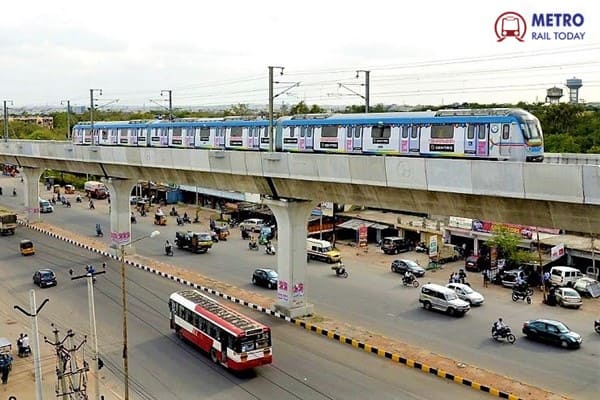 Global tender issued for procurement of 60 Rolling Stock coaches for Hyderabad Metro Rail Project
Delhi section of Delhi-Meerut RRTS Corridor anticipated to complete by Mid-2025
MRT Online Desk
Posted on: 2024-04-05 16:40:00
Viewer: 2,389
Comments: 0
Country: India
City: New Delhi
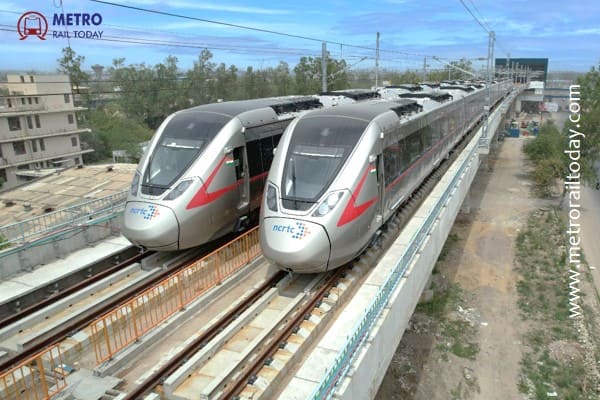
New Delhi, India (Metro Rail Today): The Delhi section of the Delhi-Meerut Regional Rapid Transit System (RRTS) is on track to be operational by mid-2025, linking Delhi to Meerut via Ghaziabad. The National Capital Region Transport Corporation (NCRTC) has reported that significant strides have been made in the construction of station buildings and tracks, with completion expected by the end of the current month.
This segment, spanning approximately 14 kilometers, encompasses both elevated and underground sections, with four stations strategically positioned in Delhi: Jangpura, Sarai Kale Khan, New Ashok Nagar, and Anand Vihar.
According to Puneet Vats, spokesperson for NCRTC, "Construction of the RRTS viaduct in the Delhi section is nearing completion, with work at all RRTS stations progressing rapidly. Less than 500 meters of the viaduct remains to be constructed, which is slated for completion by the month-end." Vats further highlighted that over 8 kilometers of viaduct have been completed, alongside an entire underground section spanning approximately 5 kilometers.
One of the main challenges encountered during construction pertains to executing activities in densely populated areas of Delhi. Complex engineering feats, such as spanning the Barapullah flyover and constructing the Yamuna river bridge, have been undertaken. Additionally, six steel special spans at Kondli Chowk were implemented to cross the Ghazipur drain.
Progress is evident at key stations along the route. Sarai Kale Khan station, in particular, stands out as one of the largest stations within the corridor. NCRTC is also working on Multimodal Integration (MMI) nodes at various stations to facilitate seamless connectivity with other modes of transportation.
The Sarai Kale Khan RRTS station is progressing well, with construction of the concourse and platform levels already completed. Notably, the station will serve as a convergence point for all three priority RRTS corridors of the first phase, enhancing its significance within the network.
Similar advancements are observed at other stations like New Ashok Nagar and Anand Vihar. At New Ashok Nagar station, the civil structure of concourse and platform levels is complete, with roof construction underway. Meanwhile, Anand Vihar's underground station is also making headway, with concourse and platform levels nearing completion.
To enhance accessibility and connectivity, various facilities are being developed. For instance, the New Ashok Nagar RRTS station is linked to the Ashok Nagar Metro station via a foot overbridge (FOB), facilitating interchange between the two modes of transport.
Overall, progress on the Delhi-Meerut RRTS project is promising, with concerted efforts to overcome technical challenges and ensure timely completion of crucial infrastructure. With the anticipated completion of the Delhi section by mid-2025, commuters can look forward to enhanced connectivity and faster transit options between Delhi and Meerut.
The ongoing developments signify a significant step towards bolstering transportation infrastructure in the region, promising improved connectivity and convenience for commuters. As the project progresses, it stands to redefine urban mobility in the Delhi-NCR area.


MRT Online Desk
Metro Rail Today is an authentic and global news provider for the Rail & Metro industry from and around the world.