

Trending Now
 Ranjit Buildcon Wins ₹383.98 Crore Civil Contract for Lucknow Metro Phase 1B
 Tamil Nadu seeks Central Support for new Metro Rail Projects in Coimbatore, Hosur and Madurai
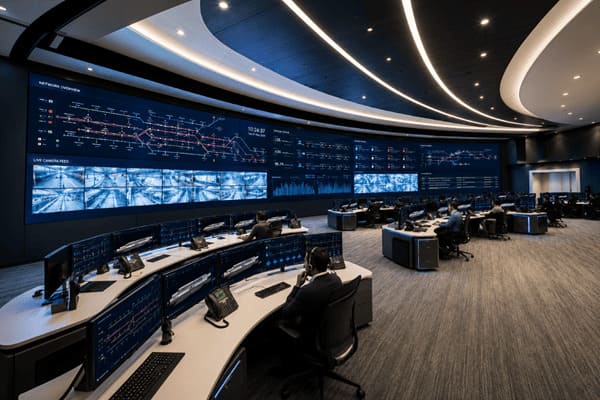 Future Metro Control Centres: ST Engineering Transforms Command Rooms to Intelligent Nerve Centres
 Kochi Metro unveils Visionary Design for Phase II Pink Line Metro Stations
 Design Consultancy Tenders floated for Ahmedabad Metro Phase 3 Elevated Corridors
 Global Metro Rail Infrastructure Market projected to reach US$ 78.3 billion by 2033
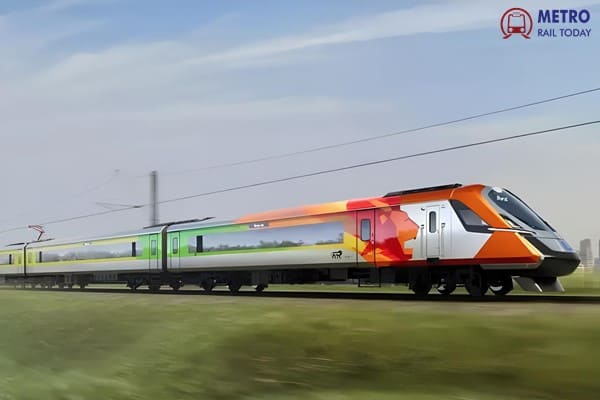 Kinet’s Vande Bharat Sleeper Concept wins prestigious Italian A’ Design Award
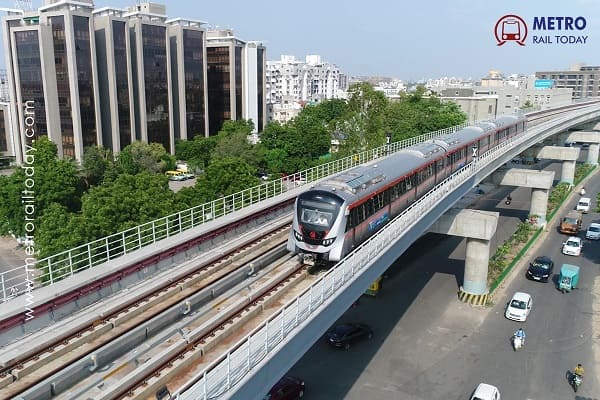 SYSTRA awarded Design Consultancy Contract for Ahmedabad Metro Phase 2 Extensions
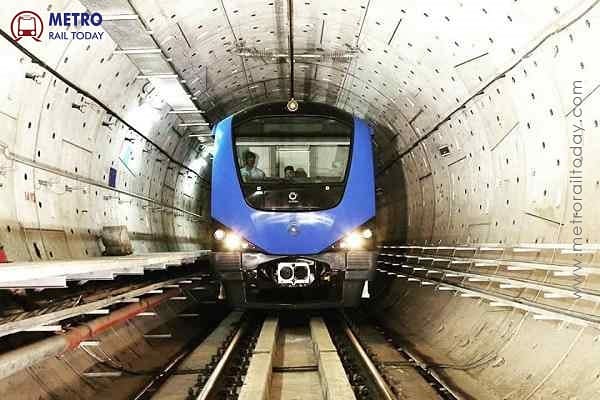 TBM Servarayan achieves Tunnel Breakthrough on Corridor 3 of Chennai Metro Phase 2
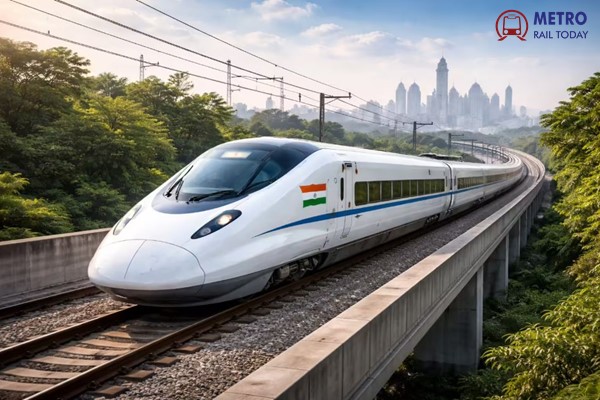 India targets 350 kmph Indigenous Bullet Train to accelerate High-Speed Rail ambitions
How Artificial intelligence (AI) is redefining the Future of Railways?
Dr. Vinod Shah
Posted on: 2026-01-01 07:10:00
Viewer: 24,172
Comments: 0
Country: India
City: New Delhi
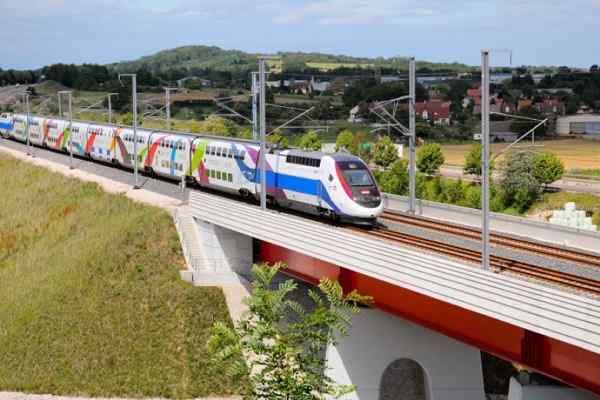
Railways are undergoing one of the biggest transformations in their 170-year history. They are no longer just steel tracks, locomotives, depots and bridges. Today’s railways are evolving into AI-driven, sensor-enabled, decision-intelligent ecosystems where every axle, switch, station, and timetable becomes a continuous stream of data.
The global shift toward predictive maintenance, autonomous operations, edge analytics, digital twins, Generative AI for scheduling, and AI-assisted safety systems is turning rail networks into living digital platforms. The countries that master this transition will not only run trains faster — they will operate them safer, greener, cheaper, and more reliable than ever before.
Below are the three core pillars that define the next era of railway analytics — from sensors to strategy.
1. IoT Data Collection at Unprecedented Scale
Modern railways today resemble mobile data centers on wheels. Millions of IoT devices and edge sensors are deployed across:
-
rolling stock (wheel condition, traction motors, doors, HVAC, vibration monitoring)
-
civil and track infrastructure (OHE, rail welds, bridges, tunnels, ballast health)
-
signalling & Telecom (interlockings, axle counters, radio networks)
-
operations (train speed, punctuality, congestion heatmaps, energy use)
The real breakthrough is not merely installing sensors — it is the rise of Edge AI.
Instead of transferring every bit of data to the cloud, first-level analytics now happens right on the train, right on the track, right on the asset. This enables:
-
real-time fault isolation
-
instant safety alerts
-
reduction in latency
-
fewer service disruptions
-
faster root-cause identification
Digital twins of rail corridors and rolling stock—virtual replicas of assets—are also becoming mainstream. They allow engineers to simulate derailments, weather stress, and component fatigue before they happen in the real world.
“The future railways will not just be maintained — they will continuously monitor and heal themselves through predictive AI ecosystems.”
2. Analytics Transformation — From Dashboards to Decisions
Data alone does not transform railways. Decisions do.
Most organizations are still stuck at descriptive dashboards — pretty graphs that tell us what we already know. Leading railways are moving through an analytics maturity curve:
-
Descriptive – What is happening now?
-
Diagnostic – Why did it happen?
-
Predictive – What will fail next?
-
Prescriptive – What should we do, right now?
Trending AI technologies accelerating this shift include:
-
Generative AI-based timetable optimisation
-
LLM-powered decision assistants for controllers and dispatchers
-
Computer vision systems that detect trespass and track obstruction
-
AI models detecting wheel flats, bearing faults & pantograph arcing
The biggest mental leap is this:
Dashboards inform. Prescriptive AI transforms.
Railways that stop at dashboards remain reactive. Railways that adopt autonomous decision engines become proactive operators capable of eliminating failures before they manifest.
Pillar 3: Decision-Making Integration — Where Value Is Actually Created
Analytics delivers value only when it is tightly integrated into operational and boardroom decisions. Modern railways are embedding AI-driven insights into:
-
Executive digital cockpits for safety, punctuality, cost KPIs
-
AI-supported Operations Control Centres (OCCs)
-
Maintenance planning systems driven by Remaining Useful Life (RUL) predictions
-
Crew deployment and rostering using optimisation algorithms
-
Passenger experience — smart ticketing, crowd management, demand forecasting
The era of intuition-based operations is ending.
Algorithms now recommend:
-
when a track should be tamped
-
when a bogie should be withdrawn
-
which train path minimises energy consumption
-
how to avoid cascading delays after disruption
Analytics becomes valuable only when it moves from insight to action — otherwise it is just an expensive reporting tool.
AI Trends Shaping Railways in 2026 and Beyond
Several technology shifts are converging at the same time:
-
5G/6G connected trains enabling high-volume real-time data streaming
-
AI-powered traffic management systems allowing higher line capacity without new tracks
-
Cybersecurity AI to protect signalling and ticketing systems
-
Energy-optimisation AI cutting carbon footprint and traction power costs
-
Conversational AI for passengers offering real-time assistance
This is creating self-learning rail networks that become more efficient every month they operate.
Why This Matters — A Call to the Rail Industry
Railways are not simply transforming because technology exists. They are transforming because the world demands:
-
fewer accidents
-
lower emissions
-
lower operational cost
-
predictable mobility
-
higher service availability
The real strategic question is no longer “Should AI be used in railways?”
The real question is:
Will railways that ignore AI remain competitive — or even safe — in the next decade?
AI in railways is not about dashboards, apps, or fancy terms.
It is about operationalising intelligence — from sensors on the track to strategic decisions in the boardroom.
Railways that embrace this shift will deliver:
-
safer operations
-
fewer breakdowns
-
lower lifecycle costs
-
better passenger experience
-
smarter, greener mobility
Railways that don’t risk being left behind.


Dr. Vinod Shah
Dr. Vinod Shah is an experienced urban transport journalist, blogger and key opinion leader.