

Trending Now
 Titagarh Rail bags major Rolling Stock contract for Ahmadabad Metro Phase 2 and Surat Metro
 Indian Railways restructures Railway Board, Redeploys 50 Senior Officers to Field Duty
 T&T Infra–Univastu JV Bags ₹229.97 Crore Civil Contract of Pune Metro Rail Project
 Rail composites market set to reach $2.4 billion by 2028 as Railways embrace lightweight materials
 Alstom powers Delhi Metro's Pink and Magenta Line with Driverless Trains and CBTC Signalling
 South India's 744-km Chennai–Hyderabad Bullet Train Corridor set to transform connectivity
 TDC Contracting bags ₹92.10 Crore E&M Systems Contract for Chennai Metro Phase 2 Corridor 3
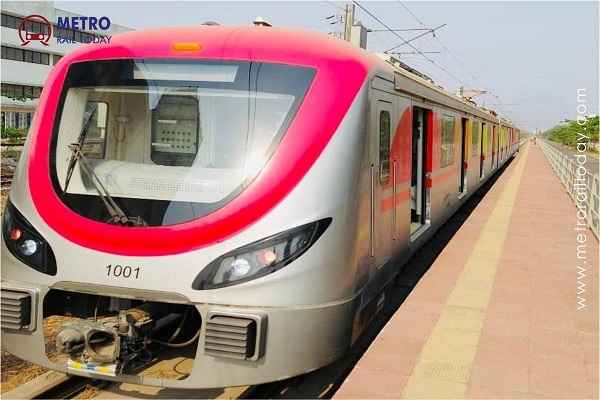 Bids Invited for 5-Year Rolling Stock Maintenance Contract for Navi Mumbai Metro Line 1
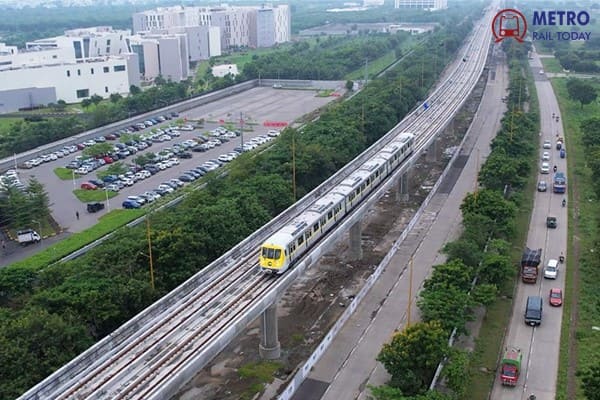 Madhya Pradesh plans to expand Indore Metro to Ujjain, Pithampur and Mhow
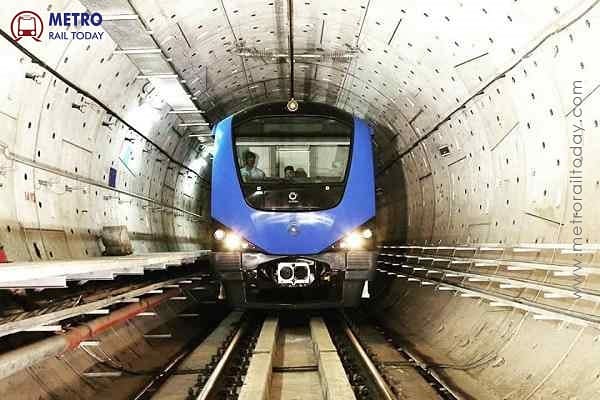 Punjab approves 27-km long Pakistan’s first fully underground Lahore Blue Line Metro Project
Pune Metro Line 3 to implement innovative Regenerative Braking System
Dr. Vinod Shah
Posted on: 2023-08-26 09:15:00
Viewer: 2,178
Comments: 0
Country: India
City: Pune
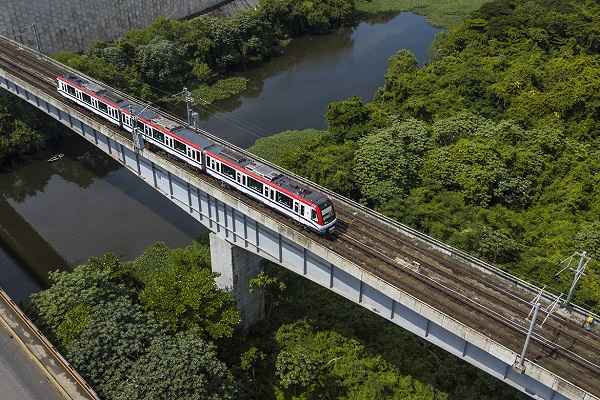
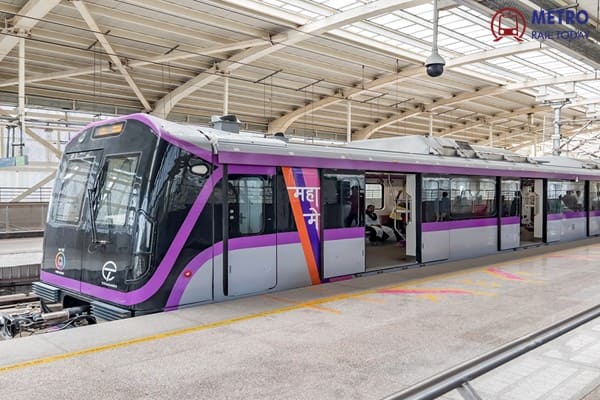
Pune, India (Metro Rail Today): Swift progress characterizes the development of Pune Metro Line 3, which is rapidly connecting the tech hub of Hinjewadi with Shivajinagar's bustling central business district. Known colloquially as the 'Puneri Metro,' this transit initiative aims not only to facilitate seamless travel but also to contribute positively to the environment. Spanning 23.3 km, the 'Puneri Metro' will operate entirely overhead and distinguishes itself by adopting a cutting-edge 'regenerative braking system.'
At the heart of this groundbreaking mechanism lies its capacity to capture and optimize the friction-generated energy during braking of the 'Puneri Metro.' With every instance of brake application, kinetic energy accumulates and seamlessly converts into electricity. This amassed power finds intelligent reuse, fueling the metro and thereby establishing a self-sustaining closed-loop energy cycle.
The execution of Pune Metro Line 3, connecting Hinjewadi to Shivajinagar, falls under the auspices of the Pune Metropolitan Region Development Authority (PMRDA), facilitated through a Public Private Partnership (PPP). Overseeing the endeavor, Tata Group has established Pune IT City Metro Rail Limited as a specialized entity to drive its realization.
CEO of Pune IT City Metro Rail Limited, Alok Kapoor, stated, "Pune Metro Line 3 remains dedicated to enhancing the urban landscape while ensuring a pleasant voyage for its commuters. The Hinjewadi to Shivajinagar Metro segment is actively fostering diverse initiatives through the Clean Development Mechanism. A central tenet of this strategy revolves around energy regeneration, facilitated by the advanced 'Regenerative Braking Technology' (RBT)."
Demystifying the Regenerative Braking System
Regenerative braking serves as an energy-recovery process that decelerates a vehicle or object by transforming its kinetic energy into an immediately usable or storable form. In the context of the metro train, when brakes are applied, kinetic energy is harnessed, reversing the current in the motors and functioning as a generator. As the train operates in reverse, the motor doubles as an electric generator, channeling electricity to the metro's batteries. This process not only saves energy but also redistributes it for use by accelerating trains on the same route.
Operational Dynamics of the Puneri Metro Braking System
Each carriage of Pune Metro Line 3, or Puneri Metro, plying between Hinjawadi and Shivajinagar, will feature both electric and electro-pneumatic braking systems. The train's motors will function as brakes and power generators. During typical speeds, electric braking will be employed; however, when the train slows to 10 kmph or less, the electro-pneumatic braking system will activate. Every carriage of the Puneri Metro will integrate two distinct electro-pneumatic circuits: a service circuit and an auxiliary circuit. An electro-pneumatic module (EPM) situated beneath the metro's chassis will coordinate these actions. This module encompasses the complete pneumatic brake activation setup, managing pressure generation, regulation, and electric brake control. All components will operate under electro-pneumatic regulation, overseen by independent brake control units.
Insights into Pune Metro Line 3
Pune Metro Line III spans approximately 23 km and operates as an elevated rail network, linking the Hinjawadi IT hub with the central business district of Shivajinagar. This Public Private Partnership (PPP) venture, awarded by the Pune Metropolitan Region Development Authority (PMRDA), is spearheaded by a consortium involving Tata Group's TRIL Urban Transport Private Limited (TUTPL) and Siemens Project Ventures GmbH. The project operates on a Design, Build, Finance, Operate & Transfer (DBFOT) basis, managed by the special purpose vehicle (SPV), Pune IT City Metro Rail Limited (PITCMRL), with a 35-year concession period, including construction duration.
Trains for the Pune Metro Line 3 will be supplied by Alstom Transport India Ltd.


Dr. Vinod Shah
Dr. Vinod Shah is an experienced urban transport journalist, blogger and key opinion leader.