

Trending Now
 Modern Trainlines and the End of Coal Trains: Why Rail Networks Have Moved Forward
 Siemens Bags Order from Titagarh Rail Systems for Pune Metro Extension Trainsets
 Titagarh Rail Systems becomes Corporate Member of Chamber of Railway Industries (Rail Chamber)
 World Bank approves ₹1,400 crore Civil Tender for Gurugram Metro Phase 2
 Bi-RIDE invites ₹200 crore Tender for Soladevanahalli Depot of Bengaluru Suburban Rail Project
 GHV India awarded ₹107.79 crore Civil Contract for Lucknow Metro East-West Corridor
 Pune Metro Line 3 set to launch First 12-km Section on 15 July 2026
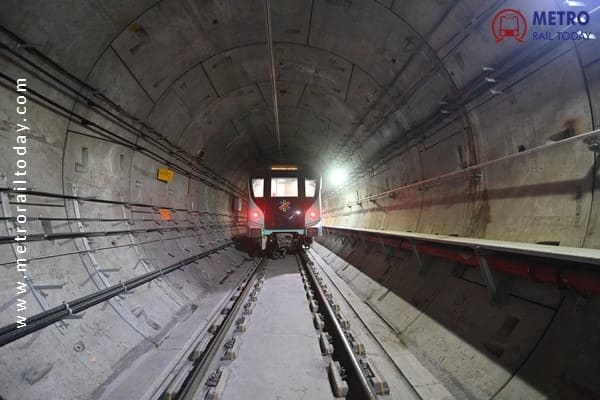 DMRC gets approval to Fell or Transplant 364 Trees for Central Vista Metro Corridor under Phase IV
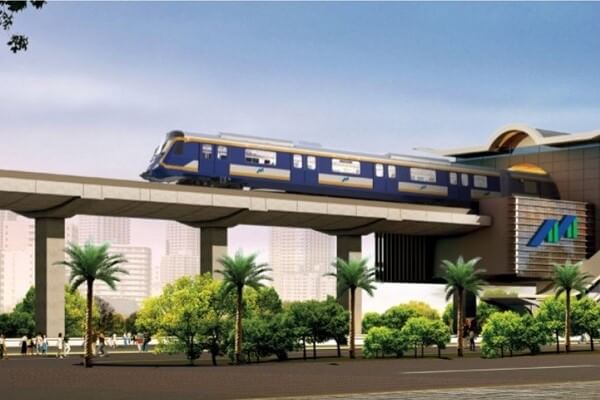 ₹4.5 Lakh crore Metro Rail Investment reaches less than 5% of Urban Population in India
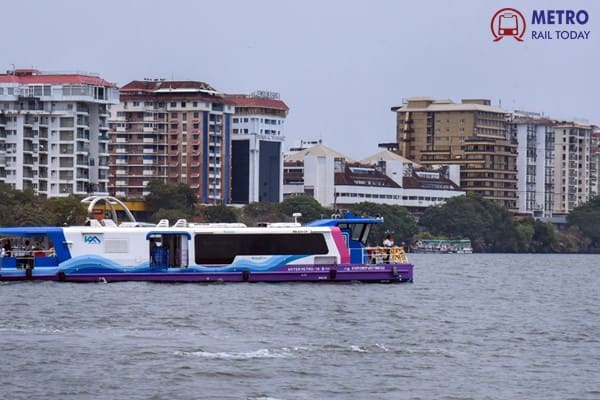 West Bengal plans to launch Water Metro Systems in Kolkata
TBM assembly begins for India’s First Undersea Bullet Rail Tunnel in Mumbai
MRT Online Desk
Posted on: 2026-04-09 15:05:00
Viewer: 2,324
Comments: 0
Country: India
City: Mumbai
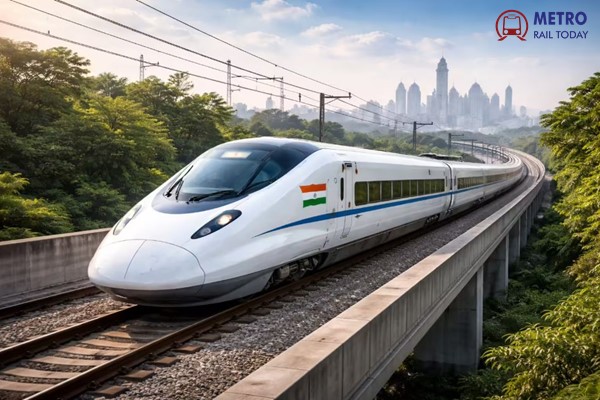
Mumbai, India (Metro Rail Today): The Mumbai-Ahmedabad Bullet Train project has achieved a major construction milestone with the commencement of Tunnel Boring Machine (TBM) assembly at Vikhroli in Maharashtra. The development marks the beginning of tunnelling works for the crucial underground section between Bandra Kurla Complex (BKC) and Sawli near Ghansoli.
The 21-kilometre tunnel between BKC and Shilphata is one of the most complex engineering components of the high-speed rail corridor. Notably, it will feature India’s first 7-kilometre-long undersea rail tunnel beneath Thane Creek. While approximately 5 kilometres of tunnelling has already been completed using the New Austrian Tunnelling Method (NATM), the remaining 16 kilometres will be excavated using advanced TBMs.
Mega TBMs to Drive Deep Underground Construction
The assembly process began with the lowering of a massive TBM shield segment weighing around 170 metric tonnes at a depth of 56 metres—equivalent to a 20-storey building—at the Vikhroli shaft. The segment, measuring over 8.6 metres in length, is part of the sophisticated tunnelling system designed for this challenging project.
Two state-of-the-art TBMs, weighing over 3,000 tonnes each, have been deployed for the project. These machines, based on Mix Shield/Slurry technology, are specifically engineered to operate in complex geological conditions, including soft soil and underwater environments. Each TBM measures over 95 metres in length and features advanced components such as cutter heads, gantries, erectors and automated systems to ensure precision tunnelling.
The tunnelling strategy involves three shafts located at BKC, Vikhroli and Sawli. One TBM will commence excavation from Vikhroli towards BKC, while the second will move from Sawli towards Vikhroli, enabling simultaneous progress from multiple ends.
Commenting on the development, Mrs. Mamta Shah, MD & CEO, Urban Infra Group, said, “The deployment of advanced TBMs for the Mumbai-Ahmedabad Bullet Train project marks a defining moment in India’s tunnelling capabilities. Constructing an undersea tunnel of this scale requires cutting-edge technology, precise engineering and robust safety systems. This milestone highlights India’s growing expertise in delivering complex, world-class rail infrastructure.”
Precision Engineering and Advanced Monitoring Systems
The tunnel, designed as a single tube with a diameter of 13.1 metres, will accommodate twin tracks and run at depths ranging from 25 to 57 metres below ground level. The deepest excavation point will reach approximately 114 metres beneath the Parsik Hills, making it one of the deepest rail tunnels in India.
To support tunnelling operations, a dedicated casting yard spanning over 11 hectares has been established in Mahape, Thane. The facility will produce around 77,000 precast segments to form 7,700 tunnel rings, ensuring structural integrity and durability. Advanced mechanisation and quality control systems have been integrated into the casting process to maintain high standards.
A comprehensive range of monitoring instruments, including settlement sensors, strain gauges and seismic monitoring systems, are being deployed to ensure safe excavation and minimise impact on surrounding structures.
Towards India’s First High-Speed Rail Corridor
The TBMs are expected to begin initial drives by July 2026, with full-scale tunnelling operations commencing by October 2026. This underground section is a critical component of the Mumbai-Ahmedabad High-Speed Rail Corridor, India’s first bullet train project, which aims to revolutionise intercity travel with high-speed, efficient and sustainable rail connectivity.
As work accelerates on this technologically demanding segment, the project continues to showcase India’s commitment to adopting global best practices and delivering next-generation rail infrastructure.


MRT Online Desk
Metro Rail Today is an authentic and global news provider for the Rail & Metro industry from and around the world.