

Trending Now
 Rail Chamber, Indo British Business Forum sign strategic MoU to boost UK–India Rail collaboration
 Revised DPR submitted for ₹12,937.23 crore Bhakti Shakti–Chakan Corridor on Pune Metro Rail Project
 Tender issued for construction of Sanoth Depot on Rithala–Kundli Corridor under Delhi Metro Phase IV
 GMRC to appoint General Engineering Consultants for Ahmedabad Metro Phase 2A, 2B & 3A
 Railway Ministry approves 220 kmph Next-Gen AI-enabled High Speed Trainsets for India
 GMRC issues first tender for Hybrid Metro–RRTS Corridors under Ahmedabad Metro Phase 3
 RITES delivers First Refurbished Metro Trainset to DMRC with advanced IP-Based Passenger System
 Uttarakhand Govt proposes extension of Delhi–Meerut RRTS Corridor to Haridwar and Rishikesh
- TBM assembly begins for India’s First Undersea Bullet Rail Tunnel in Mumbai
- Tender issued for 90 Rolling Stock Cars for Magenta Line Extension under Delhi Metro Phase IV
Baltic Rail Operators launched Joint Tender for 20 High-Speed EMUs for Rail Baltica Project
MRT Online Desk
Posted on: 2026-03-23 17:10:00
Viewer: 796
Comments: 0
Country: Finland
City: Helsinki
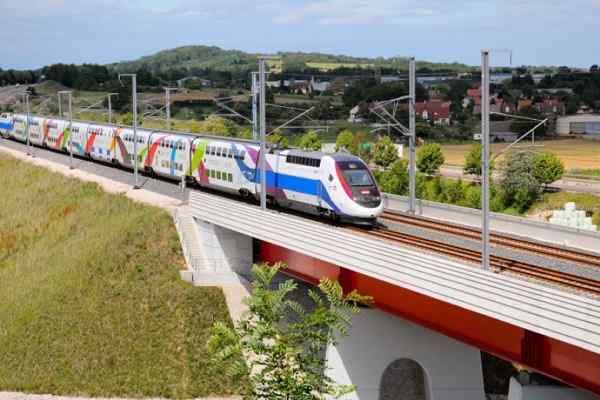
Passenger rail operators from Estonia, Latvia and Lithuania have jointly launched a framework tender for up to 20 electric multiple units (EMUs) to support future passenger services on the Rail Baltica corridor, one of Europe’s most ambitious cross-border railway projects.
The tender has been issued collectively by Elron (Eesti Liinirongid AS) of Estonia, Vivi of Latvia, and LTG Link of Lithuania, reflecting a coordinated approach to rolling stock procurement across the Baltic states. The initiative aims to ensure compatible train fleets for seamless passenger services along the upcoming standard-gauge Rail Baltica network connecting the Baltics with the wider European rail system.
According to Mart Ehrenpreis, board member of Elron, Estonia plans to acquire five trainsets with an option for two additional units, with an estimated budget of €60–75 million for the initial order. Latvia is expected to procure up to five trains, while Lithuania plans to acquire as many as eight units under the framework agreement.
High-Speed EMUs for Rail Baltica Network
The new rolling stock will be designed to operate under 25 kV AC overhead electrification and will have a maximum operational speed of 200 km/h. While the original Rail Baltica concept envisioned passenger trains operating at 250 km/h, the current tender specifications focus on slightly lower top speeds suitable for regional high-speed services.
Each trainset will have a maximum length of 106 metres and will be configured to accommodate at least 200 passengers across two classes. Passenger amenities will include a bistro area, multiple restrooms, bicycle storage for at least 20 bikes, and dedicated spaces for passengers with reduced mobility, including four wheelchair positions.
The procurement timeline indicates that the first two trains are expected to arrive in Estonia for testing in 2029, with the entire fleet scheduled to become operational by the end of 2030.
Commenting on the development, Mrs. Mamta Shah, MD & CEO, Urban Infra Group, said, “The joint procurement approach adopted by the Baltic rail operators is a strategic step toward creating an integrated regional rail system. Standardized rolling stock across multiple countries can significantly improve operational efficiency, passenger experience and long-term maintenance planning.”
Rail Baltica: Europe’s Strategic Connectivity Project
The concept of a standard-gauge railway linking Estonia, Latvia and Lithuania with the broader European network dates back to the early 1990s, following the Baltic states’ independence and their ambition to strengthen economic integration with Europe.
Formal preparations for the Rail Baltica project began in 2001, when the three countries signed an intergovernmental agreement to develop the corridor. However, progress remained slow for many years.
A major turning point came in 2014, when Estonia, Latvia and Lithuania established RB Rail, a joint venture responsible for coordinating the project’s implementation. The countries later ratified a construction treaty in 2017, enabling access to substantial European Union funding for the project.
Rising Costs and Delayed Timelines
Despite renewed momentum after 2017, the Rail Baltica project has faced significant challenges. The estimated cost of the project has risen sharply from €5.8 billion to approximately €15.3 billion, while the timeline for completing Phase 1 has shifted from 2025 to 2030.
Earlier this year, the European Court of Auditors warned that even the revised completion timeline may be difficult to achieve. The report cited multiple factors affecting progress, including disruptions caused by the Covid-19 pandemic, the geopolitical impact of the Ukraine conflict, new regulatory requirements, and unforeseen technical challenges.
Offering his perspective on the project, Dr. Vinod Shah, Director General, Indian Chamber of Railway Industries (Rail Chamber), said, “Large cross-border rail infrastructure projects often face complex technical, financial and regulatory challenges. However, initiatives like Rail Baltica are critical for strengthening regional connectivity and advancing sustainable transport across Europe.”
Preparing for Future Cross-Border Rail Travel
The new EMU fleet will play a vital role in supporting passenger operations once the Rail Baltica corridor becomes operational, connecting Tallinn in Estonia to Warsaw in Poland through Latvia and Lithuania.
By enabling fast, reliable and integrated passenger services across the Baltic region, the project is expected to transform mobility, boost regional trade and tourism, and strengthen economic ties between the Baltic states and the rest of Europe.

MRT Online Desk
Metro Rail Today is an authentic and global news provider for the Rail & Metro industry from and around the world.