


Trending Now
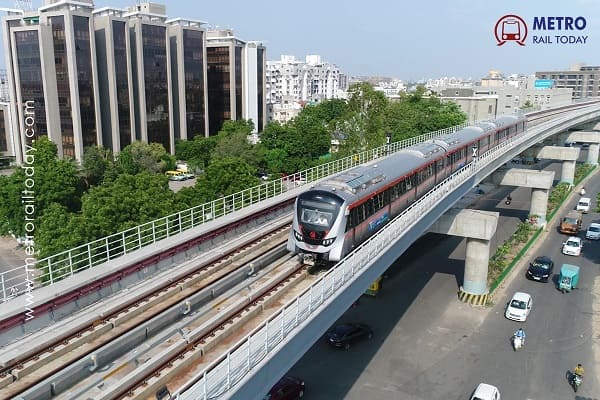 GMRC issues ₹683 crore Tender for construction of 8.68 km stretch for Ahmedabad Metro
- GMRC launches ₹439 crore Tender for construction of 5 New Ahmedabad Metro Stations
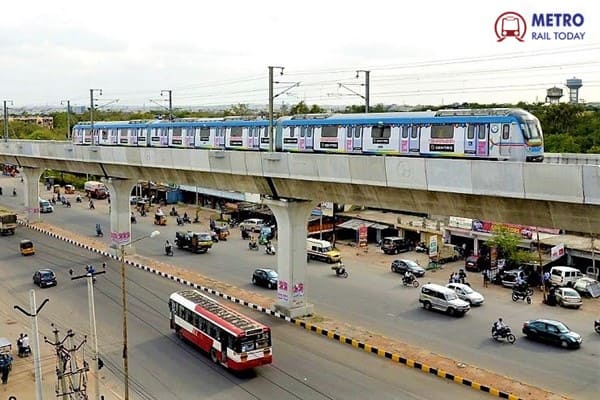 Global tender issued for procurement of 60 Rolling Stock coaches for Hyderabad Metro Rail Project
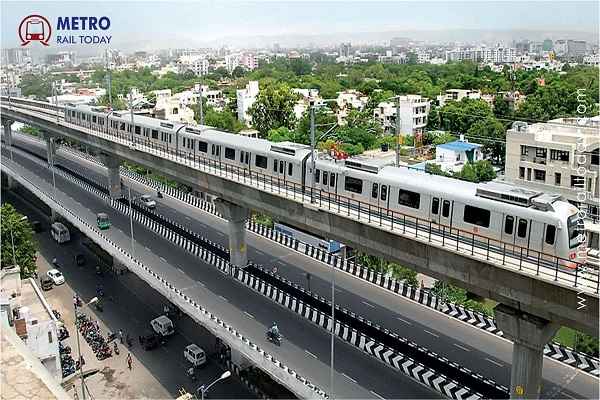 Global tender issued for procurement of 102 Rolling Stock coaches for Patna Metro Rail Project
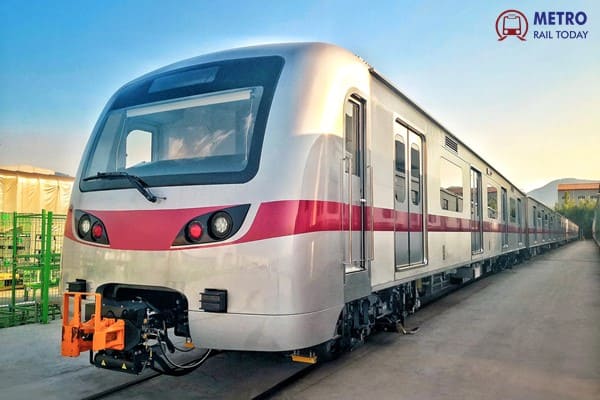 Gamuda awarded RM3.7 billion contract to build Keelung Mass Rapid Transit in Taiwan
 Maharashtra forms special Task Force to plan Rail, Metro and RRTS expansion
 Govt. of India approves ₹12,200 crore, 29-km Thane Integral Ring Metro project in Maharashtra
 World’s Top 20 Metro Systems: Engineering Marvels Transforming the Future of Urban Mobility
 NCRTC celebrates Three Years of Namo Bharat, Highlights 4.5 crore Passenger Journeys
 Alstom eyes ₹2,000 crore Chennai Metro tender for supply of 168 Train Coaches
PM Modi Flags Off India's First Namo Bharat RapidX Train on Delhi-Meerut RRTS Corridor
Groundbreaking inauguration marks commencement of Delhi-Ghaziabad-Meerut RRTS Corridor
MRT Online Desk
Posted on: 2023-10-20 12:00:00
Viewer: 2,009
Comments: 0
Country: India
City: Ghaziabad
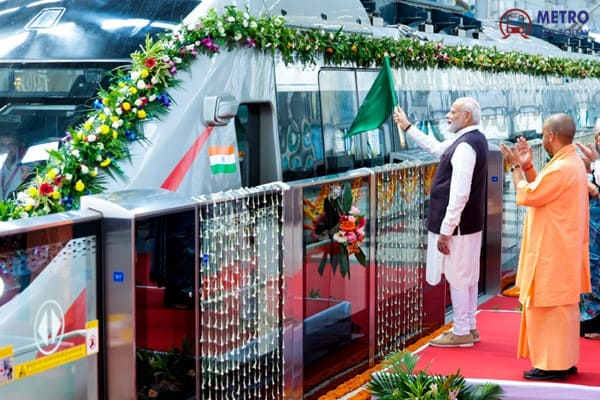
Ghaziabad, India (Metro Rail Today): The nation witnessed a significant milestone as Prime Minister Narendra Modi inaugurated the inaugural ceremony of the Delhi-Ghaziabad-Meerut Regional Rapid Transit System (RRTS) Corridor. The event was also marked by the dedication of two stretches of the Bengaluru Metro's East-West corridor and the launch of the Namo Bharat RapidX train, an initiative designed to connect Sahibabad to Duhai Depot. The esteemed presence of key dignitaries, including Governor Anandiben Patel, Chief Minister Yogi Adityanath, and Union Minister Hardeep Singh Puri, underscored the importance of the momentous occasion.
The newly opened 17 km priority section of the Delhi-Ghaziabad-Meerut RRTS Corridor, linking Sahibabad to Duhai Depot through vital stations at Ghaziabad, Guldhar, and Duhai, signifies a substantial leap forward in the realization of the ambitious RRTS project. Envisioned as a high-speed, high-frequency transit system, the RRTS promises to redefine regional connectivity, boasting trains capable of cruising at a speed of 180 kmph. This development ensures a seamless travel experience between Delhi and Meerut within an hour, thus significantly reducing travel time between various urban centers in the region, including Ghaziabad, Muradnagar, and Modinagar.
In his address, Prime Minister Modi underscored the government's commitment to modernizing public transportation while promoting environmental sustainability. He emphasized the significance of the Namo Bharat Train initiative, symbolic of the nation's progress and dedication to empowering women. Furthermore, he reiterated the government's vision for an advanced and interconnected railway network by the end of the decade, highlighting the crucial role of multimodal connectivity in fostering a robust transport infrastructure across the nation.
Union Minister Hardeep Singh Puri lauded the milestone achievement, emphasizing the transformative potential of the Regional Rapid Transit System, christened 'Namo Bharat.' Kumar Keshav, CEO of DB RRTS, expressed enthusiasm for the project's commencement and pledged to provide a world-class transit experience for passengers. Olivier Loison, Managing Director of Alstom India, echoed a similar sentiment, highlighting the project's significance in revolutionizing rail-based mobility in the country.
With an emphasis on promoting balanced and sustainable economic development, the RAPIDX is poised to leverage advanced, eco-friendly design elements, ensuring energy efficiency through state-of-the-art technologies. The Regional Rapid Transit System seeks to alleviate traffic congestion in the national capital and facilitate faster commutes between satellite towns, complementing the rapid expansion of the metro network in the country.
Scheduled to commence public services from October 21, 2023, the Namo Bharat Trains, operated and maintained by DB RRTS Operations India Pvt. Ltd., embody the spirit of the 'Make-in-India' and 'Aatmanirbhar Bharat' initiatives, offering a seamless blend of global expertise and indigenous innovation.
The National Capital Region Transport Corporation (NCRTC), operating under the Ministry of Housing & Urban Affairs (MoHUA), remains the driving force behind the implementation of the 82.15 km Delhi-Meerut RRTS Corridor, envisaging a transformative shift in the region's mobility landscape.
Delhi-Meerut RRTS Corridor
- Total Length: 82.15 km
- Project Cost: ₹30,274 crore (US$3.8 billion)
- Total Stations: 22 (excluding 2 depots at Modipuram and Duhai)
- Operational Length: 17 km
- Operational Stations: 5 (Sahibabad, Ghaziabad, Guldhar, Duhai and Duhai Depot)
- Executing Agency: National Capital Region Transport Corporation (NCRTC)
- Operator: DB RRTS Operations India Private Limited
- Rolling Stock: Alstom Transport India
- Fare: Standard Class (Rs 20 to 50), Premium Class (Rs 40 to 100)

MRT Online Desk
Metro Rail Today is an authentic and global news provider for the Rail & Metro industry from and around the world.