

Trending Now
 Alstom and Siemens sign $1.5 billion Rolling Stock contract for Riyadh Metro Rail Project
 Bangladesh approves Tk 58,477 crore contracts for Dhaka Metro Lines 1 and 5
 RATP Dev–ComfortDelGro JV signs Operations & Maintenance Contract for Copenhagen Metro
 Rail Chamber explores India–Czech Railway Industry Partnerships at New Delhi Business Forum
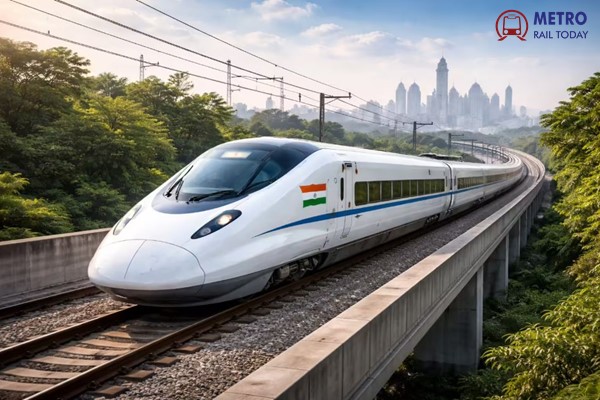 India must prove Safety before running different Bullet Train Systems on One Corridor: JTTRI Chief
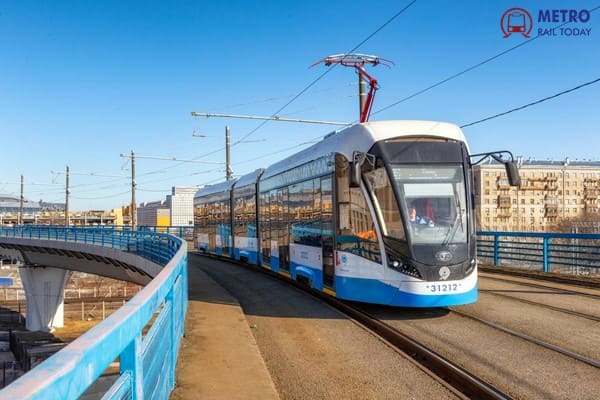 Tender issued for Feasibility Study to Transition Hubballi-Dharwad BRTS to Modern Tram System
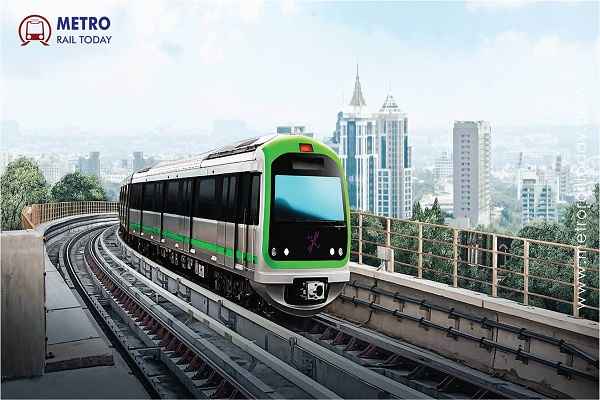 Tamil Nadu Chief Minister seeks Centre’s approval for Bengaluru–Hosur Metro Link
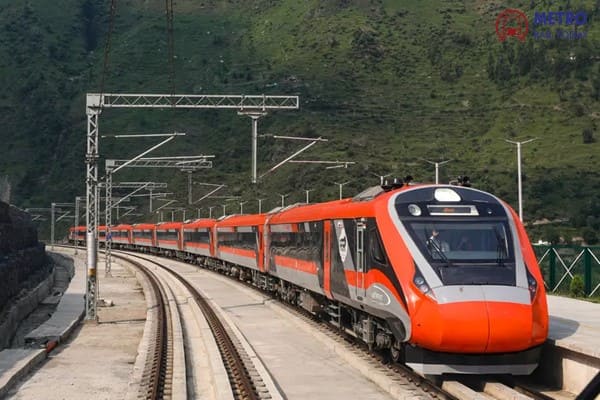 K-RIDE to appoint Detailed Design Consultant for Bengaluru Suburban Rail Project
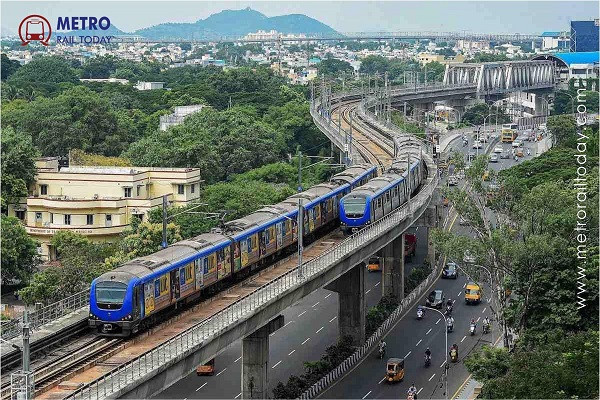 Prime Minister Narendra Modi inaugurates first 15-km stretch of Chennai Metro Phase 2
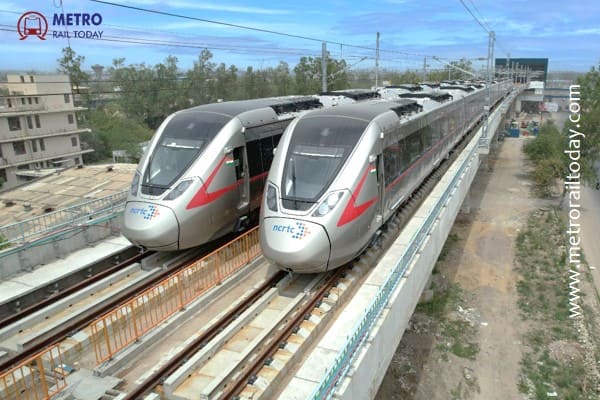 Karnataka proposes 270-km RRTS Network linking Bengaluru with Tumakuru, Mysuru and KGF
Feasibility study begins for 705 km Hyderabad–Chennai High Speed Bullet Train Corridor
MRT Online Desk
Posted on: 2025-08-25 09:05:00
Viewer: 11,494
Comments: 0
Country: India
City: Chennai
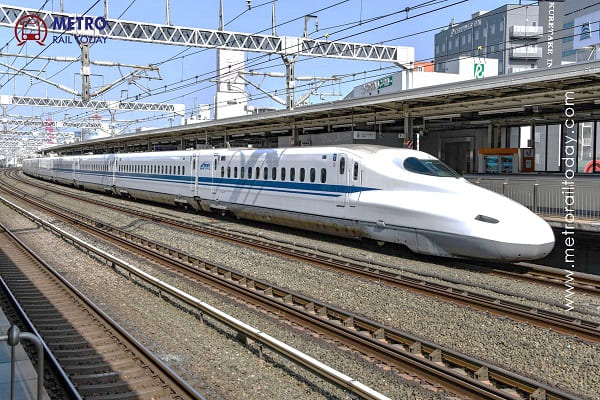
Chennai, India (Metro Rail Today): In a significant development for South India’s infrastructure ambitions, a new feasibility study has been launched to explore the creation of a high-speed rail corridor between Hyderabad and Chennai. The project, if implemented, could dramatically cut travel time from the current 12 hours to just 2 hours and 20 minutes, revolutionizing passenger mobility between the two major cities.
The study is being conducted by RITES Ltd, a government-owned engineering consultancy, and forms part of India’s broader vision to expand bullet train connectivity across key economic corridors. The initiative reflects growing momentum behind high-speed rail development beyond western India, where the Mumbai–Ahmedabad bullet train corridor is already under construction.
RITES has been tasked with conducting the final alignment survey, traffic potential analysis, and preparing the Detailed Project Report (DPR). The study will also include topographical assessments and early design considerations for what would become one of India’s most critical southern transport arteries.
If implemented, the proposed 705-kilometre corridor would be constructed along a dedicated, elevated alignment, designed to support train speeds of up to 350 km/h, with actual operational speeds capped at 320 km/h. The corridor would reduce journey times between the two state capitals to just over two hours, providing a competitive alternative to both conventional trains and regional air travel.
Currently, travel between Hyderabad and Chennai by rail takes approximately 12 to 14 hours via conventional services on existing Indian Railways routes. The high-speed corridor would not only reduce this drastically but also decongest existing lines, support economic integration, and enhance regional productivity.
A senior railway official involved in the planning process noted that while the feasibility study is in its early stages, the project is expected to require a minimum construction timeline of 15 years, based on current benchmarks and experiences drawn from the Mumbai–Ahmedabad line.
The Hyderabad–Chennai line is part of a larger strategic framework to introduce high-speed connectivity across South India. A parallel feasibility study is also underway for a Hyderabad–Bengaluru bullet train corridor, signalling a focused push to develop a high-speed rail triangle among southern India’s major cities.
Mrs. Mamta Shah, MD & CEO of Urban Infra Group, commented on the initiative, “This project holds immense transformative potential. Connecting Hyderabad and Chennai in just over two hours would redefine regional accessibility, support the growing tech and manufacturing sectors in both cities, and unlock a new era of clean, high-speed, intercity travel in the South.”
As India continues its transition toward advanced transportation infrastructure, high-speed rail remains a core pillar of the government’s vision under the Viksit Bharat 2047 roadmap. While the Hyderabad–Chennai project is still in the planning stage, its successful execution could set the tone for a new phase of pan-India bullet train connectivity.


MRT Online Desk
Metro Rail Today is an authentic and global news provider for the Rail & Metro industry from and around the world.